
Recognise the signs of burnout at work, discover three practical ways to manage pressure, and find support for yourself or your team.
It’s 11pm. You’ve finished work, but your mind is still there. You’re replaying a conversation, worrying about tomorrow’s deadline or wondering how you’ll get through another week feeling this exhausted.
Perhaps you’ve typed “how to deal with stress at work” into Google because you need something to change. If that sounds familiar, I’m glad you’ve found your way here, folks. 💜
International Stress Awareness Week
The theme for International Stress Awareness Week 2026, running from 2–6 November, is “Shaping the Future of Stress and Wellbeing: Rehumanising the Workplace.”
For me, that starts with remembering that behind every job title, deadline and target is a person with feelings, responsibilities outside work and limits that deserve respect.
Whether you’re overwhelmed yourself or leading a team under pressure, stress management at work starts with acknowledging what is happening. You don’t need to wait until breaking point to ask for support.
Recognising the signs of work stress
Ongoing pressure can follow you home, affecting your sleep, relationships and confidence. Perhaps your stomach drops on Sunday afternoons, or you keep checking emails during dinner.
These changes deserve attention, even if you’re still meeting deadlines and turning up with a smile.
Physical symptoms of work stress
Common physical symptoms of work stress include headaches, muscle tension, stomach problems and changes in sleep or appetite. You might also feel irritable, struggle to concentrate or find everyday decisions harder.
The NHS guide to stress explains these symptoms in more detail.
Persistent exhaustion and other symptoms can have different causes, so please don’t assume everything is “just stress”. Speak to your GP about new, persistent or worrying symptoms.

Signs of burnout at work
Burnout is more than a difficult week. The World Health Organization describes it as an occupational phenomenon linked to chronic workplace stress that has not been successfully managed, characterised by:
Feeling depleted or exhausted.
Becoming distant, negative or cynical about your work.
Feeling less effective in your role.
Stress and burnout can overlap with anxiety, depression or physical illness. You don’t have to work out the right label before seeking help.
Three MoJoe tips for stress management at work
When you’re overwhelmed, another list of things you “should” do can add pressure. Start with whichever of these feels most useful.

1. Make your workload visible
Write down your tasks, deadlines, and roughly how long each will take. Include the less visible work: meetings, messages, interruptions and helping colleagues.
Then ask yourself: does this actually fit into the time available?
If it doesn’t, working faster or skipping lunch may not solve the problem. Where priorities conflict, ask the person assigning the work to help decide what moves, changes or gets shared.
Try:
“I can finish the report today or prepare tomorrow’s presentation. I don’t have enough time to do both properly. Which should take priority?”
Making the limits clear gives you a starting point for a realistic conversation.
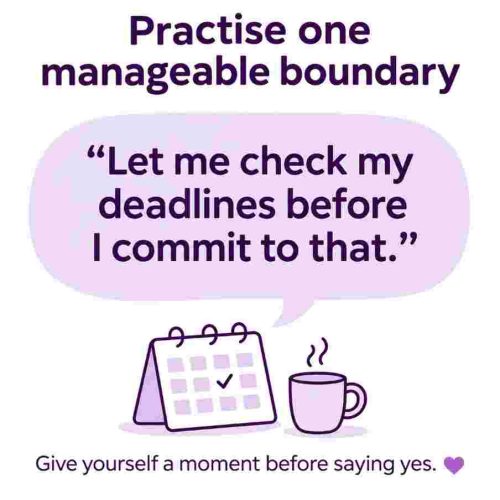
2. Practise one manageable boundary
If you’re used to being the helpful one, setting boundaries can bring up guilt. An automatic “yes” may feel easier, even when you’re already stretched.
Choose one boundary to practise, such as taking your agreed break or checking existing commitments before accepting another task.
You could say:
“Let me check my deadlines before I commit to that.”
If you work shifts or have on-call responsibilities, boundaries need to fit those arrangements. The aim is to make expectations clear and workable, including when you are available and when you can switch off.
3. Give yourself a brief pause
When pressure builds, you may move between tasks without noticing how tense you’ve become.
If your work allows, pause. Feel your feet supported, soften your shoulders and take a few gentle, unforced breaths. If focusing on breathing feels uncomfortable, simply notice your surroundings. Perhaps get a drink or step away from your screen.
These workplace stress coping strategies may help you feel more settled, but they won’t fix unreasonable workloads, bullying or inadequate support. The causes need attention too.
How to talk to your boss about stress
Ask for a private conversation and bring specific examples of what is happening, how it affects you and what would help.
You might say:“My current workload is affecting my sleep and concentration. I’m regularly working beyond my hours. Can we review priorities and agree what can be delayed, reassigned or reduced?”“ Agree the next steps and a time to review them. If your manager is part of the problem, another manager, HR, a trade union representative or occupational health may be a better starting point.
When to seek professional support for work stress
If stress affects daily life, you’re struggling to cope, or your own efforts aren’t helping, speak to your GP. In England, you can also refer yourself to NHS Talking Therapies for anxiety and depression without a GP referral.
Mental health coaching can also give you space to explore patterns, practise difficult conversations, and consider your next steps. It does not diagnose or treat mental health conditions or replace medical care.

Rehumanising the workplace through leadership coaching
Alongside supporting individuals, I provide coaching within businesses and organisations, including at executive and leadership level.
My corporate experience as a high-achieving manager means I understand competing priorities and the pressure to deliver. My own mental health journey also shapes the empathy I bring to this work. You can read my story here.
Through coaching, I help leaders explore how their expectations, communication and behaviour influence others. We can consider three important questions: Are workloads realistic? Can people speak honestly about difficulties? What example are leaders setting through their own boundaries?
Leaders also need somewhere to reflect on their pressures. That space can help them make more considered decisions about how they support their teams. Rehumanising the workplace means bringing care for people into everyday working practices, alongside the goals an organisation needs to achieve.
Let’s talk about what you need
Whether you’re struggling with work stress yourself or looking for coaching within your organisation, we can discuss what support could look like.
I offer coaching at the MoJoe Lounge, Edwinstowe House, Nottinghamshire, and online.
Book a free discovery session and let’s have a cuppa and a chat. You don’t need to arrive with everything worked out.
Let’s explore how you can get your MoJoe back, folks. ☕💜
Not quite ready to chat? Sign up to MoJoe Mail for practical encouragement and updates.
